Category: Power Wheelchair
Posted by 2025-12-19 11:12
hoyer lift for bath
Bathroom Hoyer Lift: The Key to Safe Bathing and a Relief for Caregivers
Bathing should be a moment of relaxation and rejuvenation, but for individuals with mobility impairments and their caregivers, it can become a stressful, risky, and physically demanding task. The bathroom Hoyer lift (commonly referred to as a bath lift or shower transfer system) is specifically designed to address this challenge, transforming bathing back into a safe, comfortable, and dignified experience.
Why Is a Specialized Lift Needed for the Bathroom?
The bathroom environment presents unique challenges for transfers:
Slippery Surfaces: Significantly increase the risk of falls.
Space Constraints: Standard portable lifts are difficult to maneuver in narrow bathrooms.
Entering and Exiting the Bathtub: One of the most dangerous movements, posing a high risk of falls and injuries for both the user and the caregiver.
Caregiver Fatigue: Manually lifting and moving the user in a damp environment places immense strain on the caregiver’s back.
Types of Bathroom Lifts and Solutions
Based on the user’s needs and bathroom layout, there are several main solutions:
1. Bath Tub Lifts
Description: The most common type of bathroom lifting equipment. A lifting device with a waterproof seat is fixed to the edge of the bathtub or the wall behind it.
Working Principle: The user sits on a bathroom wheelchair or transfer board, moves to the edge of the bathtub, then transfers to the lift’s seat. Via electric or hydraulic operation, the seat lowers to lower the user into the bathtub; after bathing, it lifts the user back out.
Advantages: Directly solves the biggest challenge of entering and exiting the bathtub.
Types:
Fixed Type: Permanently installed on the bathtub.
Portable Type: Can be moved for use with different bathtubs, suitable for renters or travelers.
2. Ceiling-Mounted Lifts (Bathroom Track Systems)
Description: The most comprehensive and safest solution. Waterproof tracks are installed on the ceiling, covering the entire path from the changing area to the shower area or above the bathtub.
Working Principle: The user sits in a dedicated waterproof sling or shower chair and is transferred via an electric hoist on the ceiling. Caregivers can easily move the user under the showerhead or lower them directly into the bathtub.
Advantages:
Ultimate Safety: The user does not touch the floor throughout the process, completely eliminating the risk of slipping.
Maximum Effort Savings: Caregivers do not need to perform any lifting movements.
Full Coverage: Can serve the entire bathroom space.
Disadvantages: Requires professional installation and structural assessment, with the highest cost.
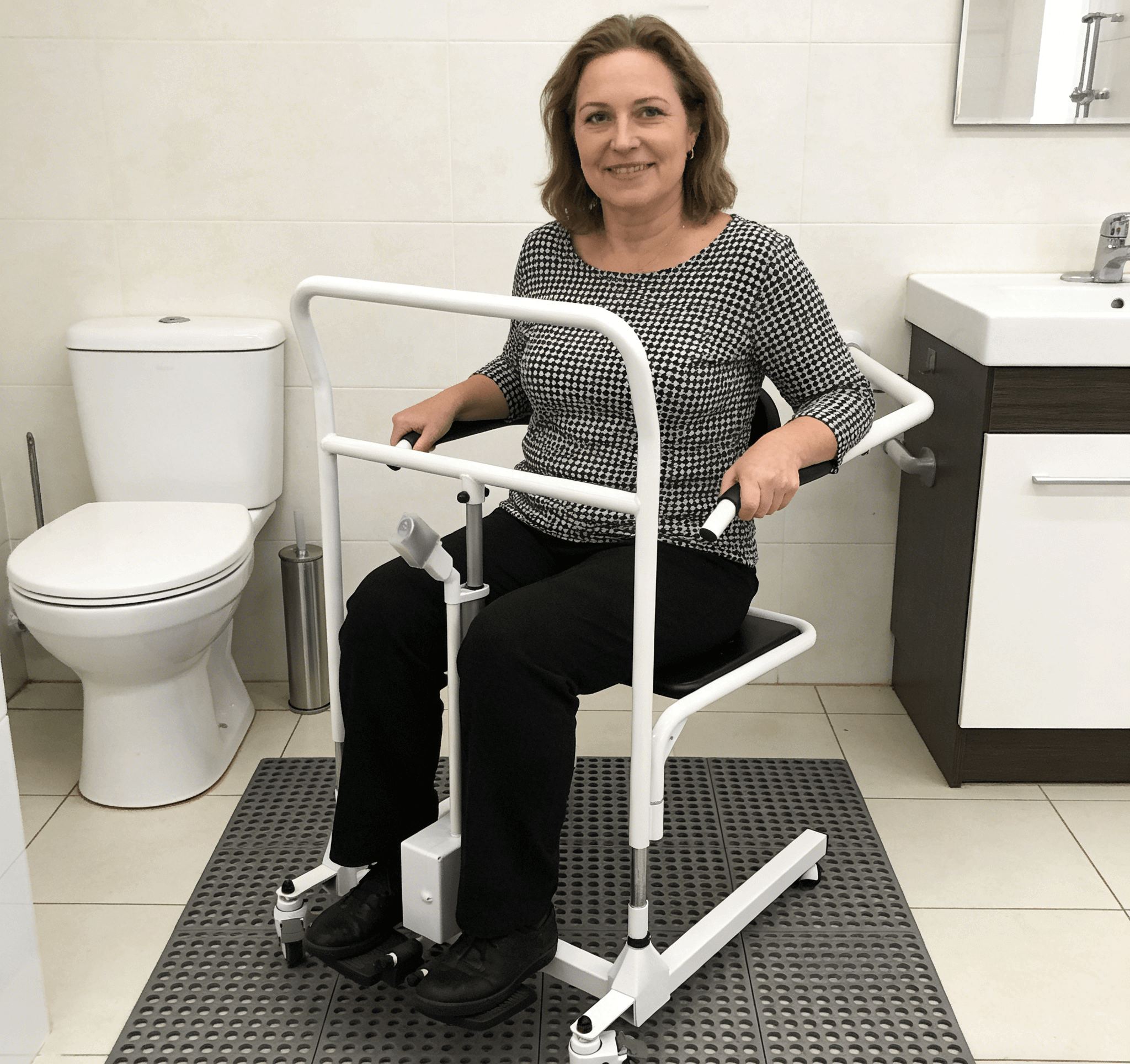
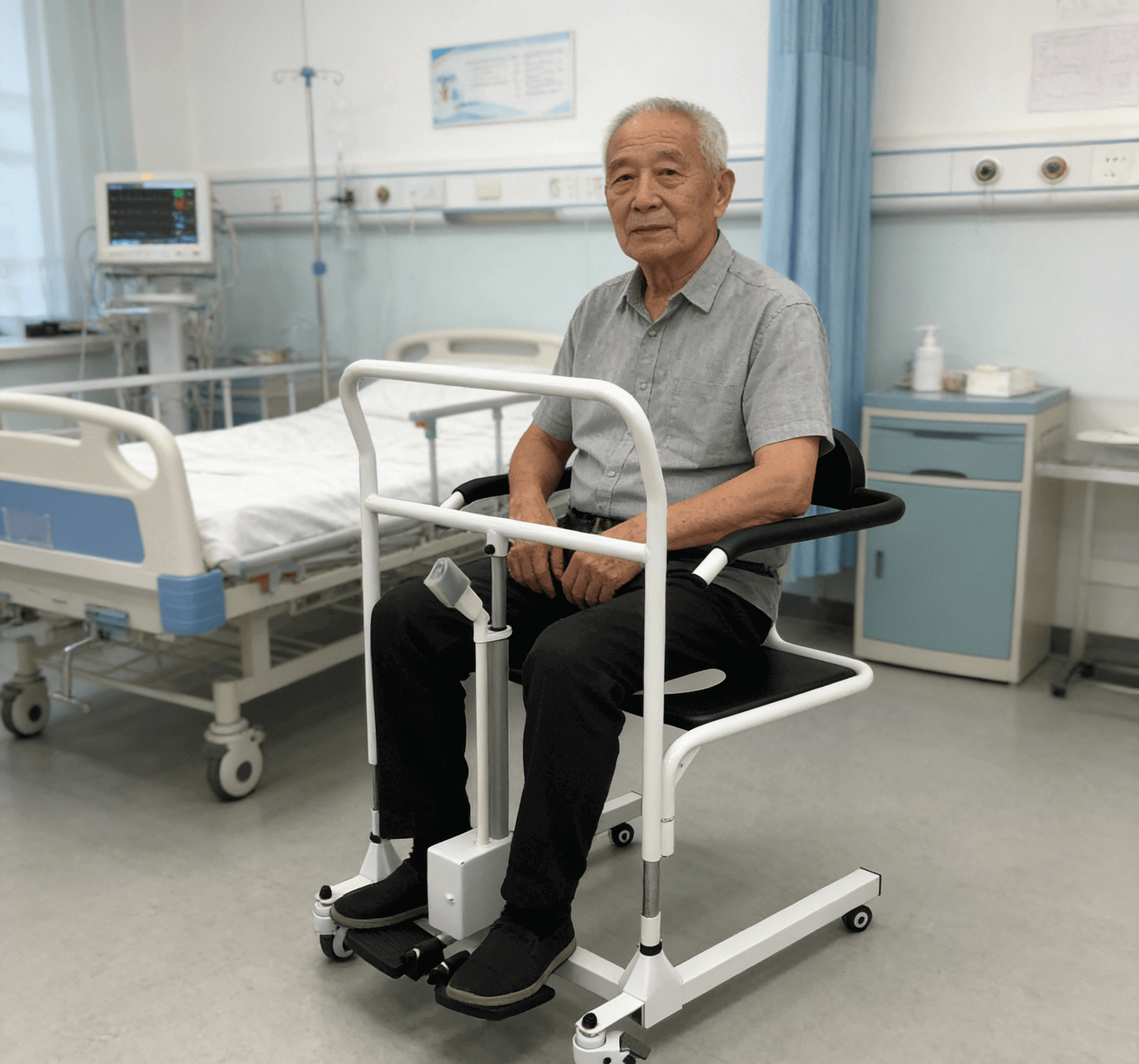
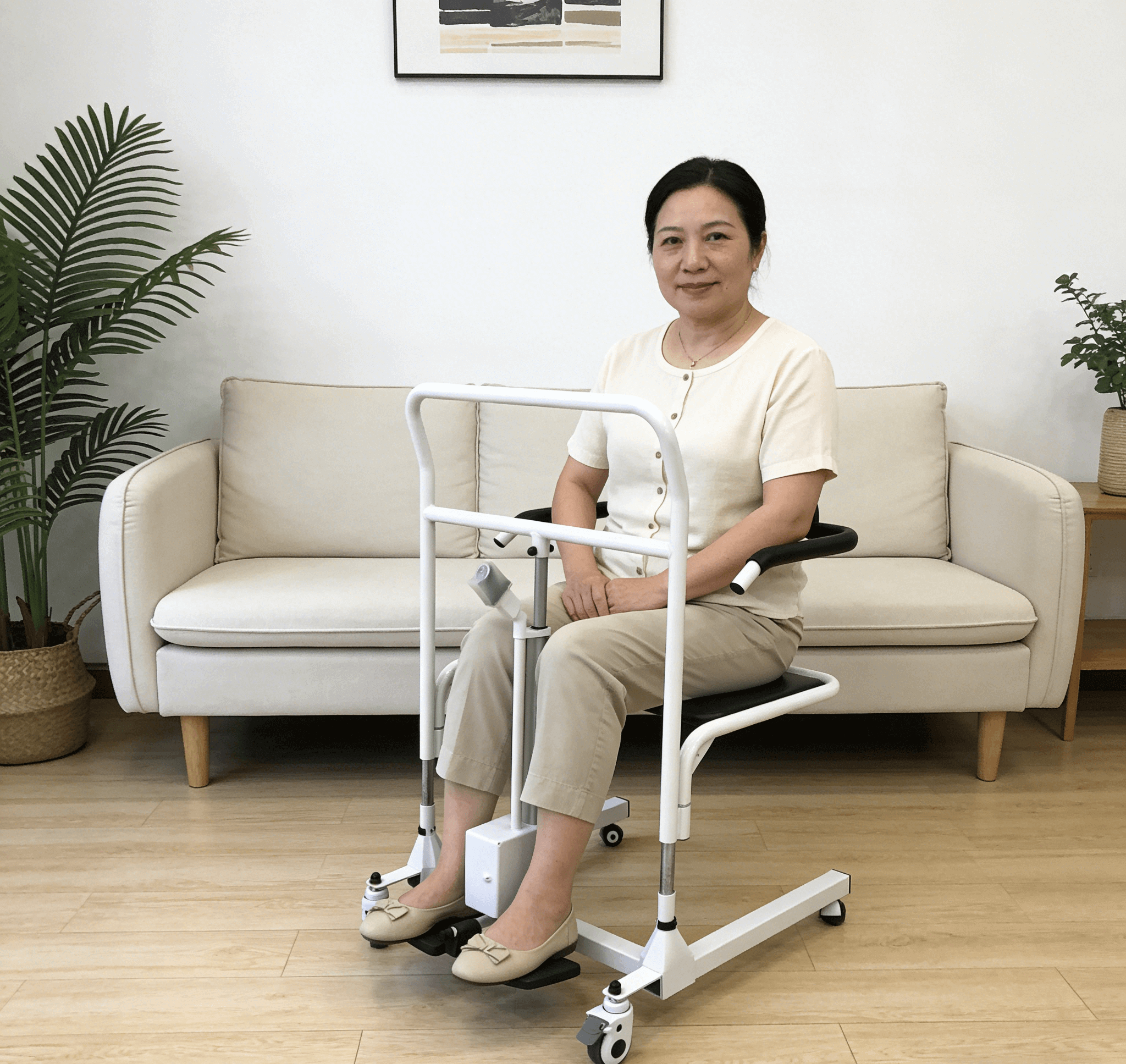
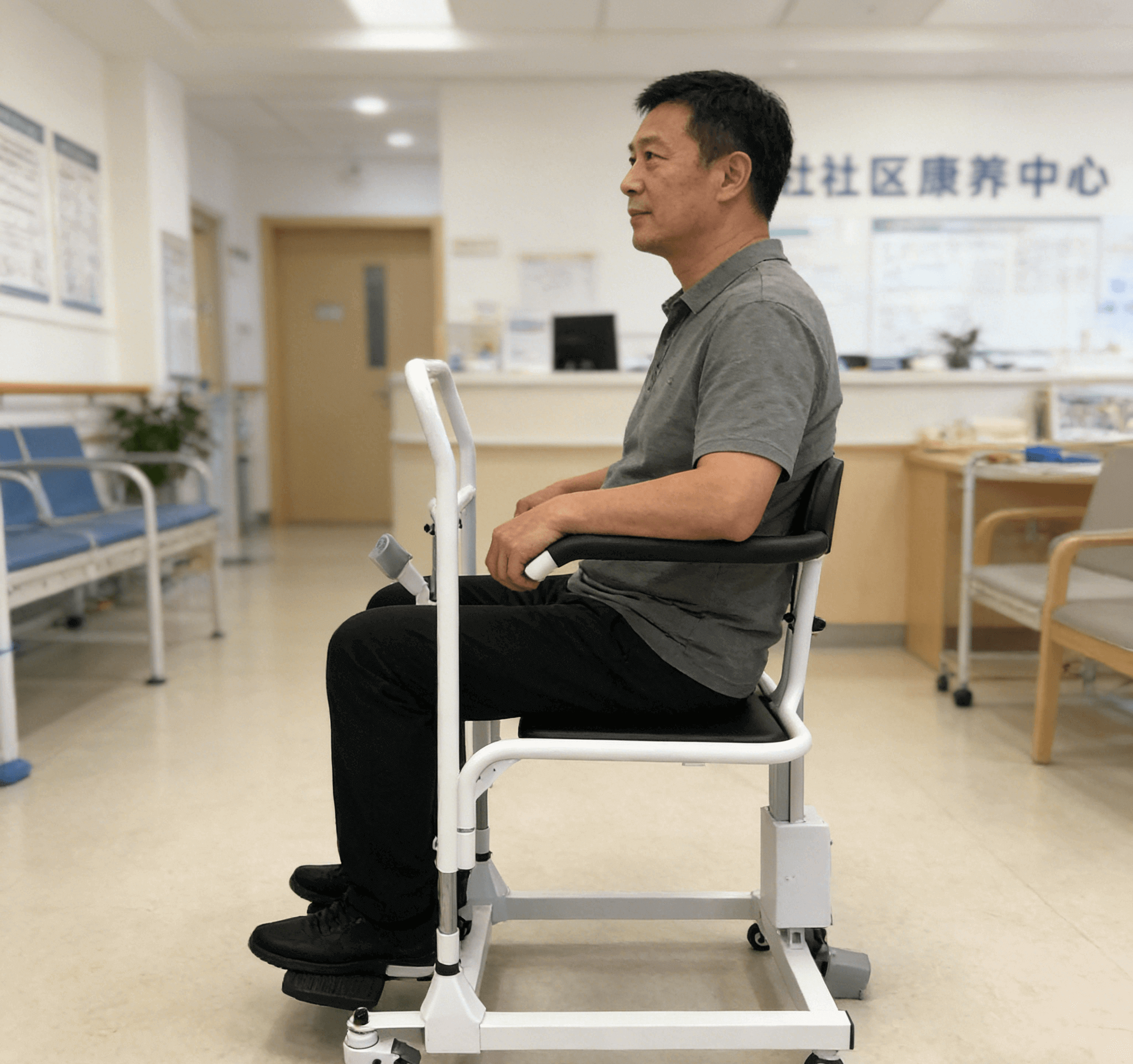
3. Portable Lifts Specialized for Bathrooms
Description: Some manufacturers produce portable lifts with waterproof or highly moisture-resistant features, specifically designed for bathroom environments.
Advantages: High flexibility, no installation required.
Disadvantages: Still require sufficient operating space in the bathroom, and caregivers still need to exert some physical effort when pushing.
Key Features of Bathroom Lifts
Waterproof and Rustproof: All electronic components and metal parts must undergo special treatment to resist moisture and corrosion. Motors typically have an IP rating (e.g., IPX4 or higher) to ensure splash resistance.
Specialized Seats and Slings:
Shower Chairs: Usually have drainage holes and are made of mildew-resistant, quick-drying materials.
Waterproof Slings: Used with ceiling-mounted lifts, made of canvas-like material with a waterproof coating for easy cleaning and disinfection.
Weight-Bearing Capacity: Ensure the equipment’s capacity is suitable for the user.
Power Safety: The equipment must be connected to a power source via a ground fault circuit interrupter (GFCI) or use a low-voltage battery system to ensure absolute safety.
Selection Guide: How to Choose the Right Equipment for Your Bathroom?
Evaluate the User’s Abilities
Can they move from a wheelchair to the lift seat with assistance? This determines whether you need a bath tub lift or a full-coverage ceiling system.
Evaluate the Bathroom Layout
Bathtub Type: Is it freestanding or built-in? This affects the installation of a bath tub lift.
Space Size: Is there enough space to maneuver a portable device?
Ceiling Structure: Concrete ceilings are suitable for track installation; suspended ceilings require reinforcement.
Consult Professionals
Occupational Therapists are your best advisors. They can conduct home visits, assess the user’s specific needs and bathroom environment, and recommend the safest and most suitable solution.
Contact professional accessibility renovation companies or medical equipment suppliers to obtain quotes and proposals.
Safe Usage Tips
Anti-Slip Measures: Lay anti-slip mats in the operation area.
Prepare in Advance: Before transferring the user, place bathing supplies (soap, shampoo, towels) within easy reach.
Check Water Temperature: Adjust the water temperature before the user enters the water area to prevent scalding.
Familiarize with Emergency Procedures: Learn about the device’s manual lowering function for emergencies.
Thorough Drying: After use, thoroughly dry both the user and the equipment before transferring out of the wet area.
Conclusion
The bathroom Hoyer lift is more than just a piece of equipment—it is a gateway to independent, comfortable, and dignified bathing. By taking on all the physical risks and burdens, it restores bathing time to its essence: a moment of relaxation and revitalization. Whether you choose a relatively economical bath tub lift or invest in a fully automatic ceiling system, this investment will yield substantial returns through significantly improved safety, greatly reduced caregiving burden, and restored quality of life.